
But It Cost R350 New!
This is what every second person who wants to sell us books tells us. And listen, we get it. When you’ve paid full price for a book, you expect it to retain some of that value. But second-hand book pricing is an entirely different beast, and it plays by a whole new set of rules.
The moment a book leaves a bookstore (or, more accurately, the moment the card machine beeps), its value stops being about what it cost and starts being about what it’s worth—which, in the used book world, is determined by demand, availability, condition, and what we can actually sell it for.
So why do some books cost more than others? And why do we sometimes have to decline buying books even in perfect condition? Buckle up, because we’re about to break it down.
1. The Harsh Truth About Resale Value (And My Greatest Regret)
When I first started out in this business, I was clueless. Like, spectacularly clueless. Case in point: I once sold my entire set of The Wheel of Time by Robert Jordan for R300 on Facebook Marketplace. I posted it with a simple “Make an offer,” someone did, and without hesitation, I accepted.
That was five years ago. Since then, I’ve tried countless times to get another complete Wheel of Time series. Spoiler alert: I still haven’t managed. And if I did, it would cost me many multiples of what I originally sold mine for. Painful lesson learned.
So no, we don’t price books based on whether they were expensive when new. We price them based on what they are actually worth in the second-hand market. And I hate to break it to you —your Twilight box set from 2008? Not exactly the rare collectible you might think it is.
2. We Buy (And Price) Books Based on What We Can Sell Them For
We get numerous daily requests from readers asking if we will buy their books. The answer? We buy a lot—but we say no a lot too. And it hurts to say no. But for a book to make it onto our shelves, it has to pass a strict checklist:
-
The condition must be top-notch. (If it looks like it went through a washing machine, it’s a no.)
-
It must be in demand. (We love obscure poetry collections as much as the next book nerd, but we need to know someone else will, too.)
-
The market must not be flooded. (If every other used bookshop has 50 unsold copies of Fifty Shades of Grey, we don’t need to add another.)
We go wide, not deep with our stockholding, which means we rarely keep more than one copy of a particular title unless historic sales data shows there’s exceptional demand.
And even if a book checks all those boxes, the price we offer is based on fitting it into our target pricing brackets. We have a well-earned reputation for offering good value, and we’re not going to stock books that don’t align with that.
The majority of our books—75% of our stock—fall into the R50-R80 range, because that’s where we think books of our calibre and quality should be priced. The newer books, and the ones in high demand, typically land in the R80-R120 range. And the top 1%—the books still warm from the printing press? Even those, we insist, should come in well under R190 and be at least 30-50% cheaper than the big chain bookshops.
3. The Market Decides (Not Us)
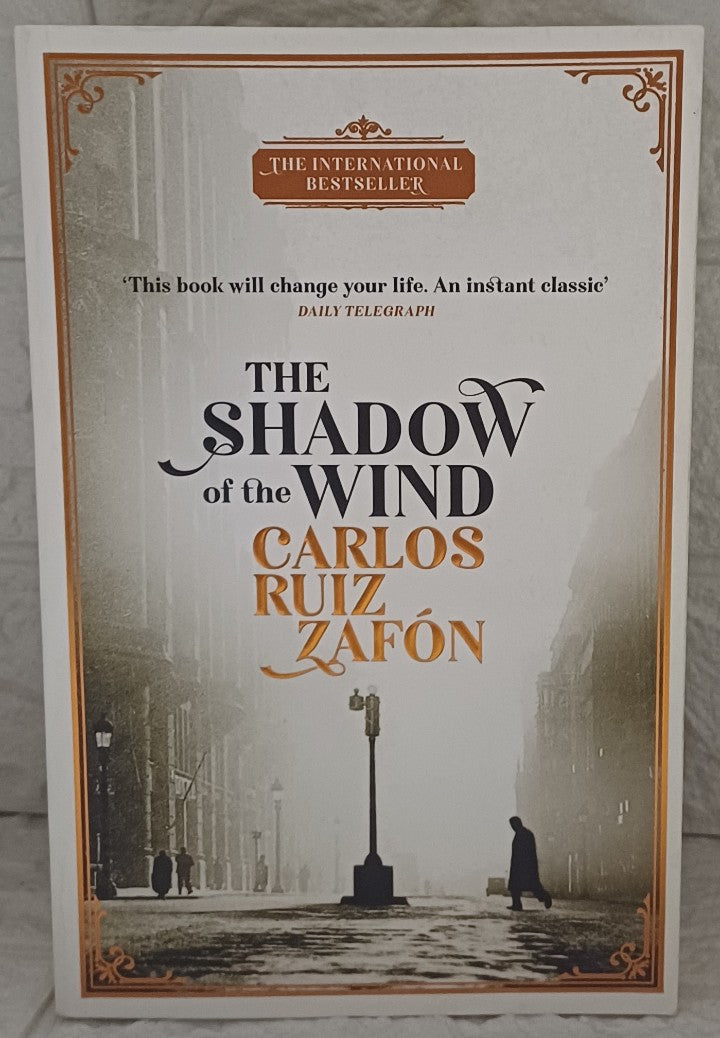
Since we started keeping digital records, we’ve shipped over 20,000 books, and if there’s one thing we’ve learned, it’s that pricing is a game of strategy, not sentiment. We don’t pull numbers out of a hat or price books based on how much we personally loved them (if we did, The Shadow of the Wind would be worth more than gold). Instead, our pricing is data-driven—because guessing just doesn’t cut it when you’ve got thousands of books moving in and out constantly.
We use AI to help us make these tough calls. It sifts through mountains of sales data and helps us by identifying and flagging trends. If thrillers are vanishing from our shelves at warp speed, it nudges us to stock more. If fantasy novels are sitting around collecting existential dust, it gently suggests we slow down. If we ever buy another Steve Cavanagh, our AI bot has threatened to resign and go home. It also keeps an eye on the bigger market, ensuring our prices stay ultra-competitive—because let’s be honest, no one should ever have to pay more than they should.
4. The Price We Pay Is Based on What We Can Source It For
Regrettably, you didn’t know we existed and paid R400 in Fourways Mall for the latest Daniel Silva (plus R35 for parking). You think we should be buying it at such and such—so you can explain to your husband that it actually only cost you the difference. The problem is, we know where we can get that exact Daniel Silva cheaper than your husband-appeasing price. It wouldn't make sense for us to buy it for anything more than we regularly get it—so long as we can get it elsewhere.
Let’s pick a bad analogy. You start a tuckshop and need colddrinks. So you find a wholesaler—be it Makro or Coca-Cola themselves—and you get your tins of Sparberry at whatever the wholesale price is. When you need more, you simply order more. Now, someone comes into the tuckshop with a can of Sparberry they bought at the Quickshop. They want to sell it to you at a price that’s lower than what they paid, but still more than what you can get it for wholesale. Makes no sense, right? Exactly.
5. Some Books Are Here for the SEO, Not the Sales
Here’s a little secret: not every book on our website needs to sell to be valuable to us. Some books exist purely to make Google love us.
For example, let’s talk about The Covenant of Water by Abraham Verghese. A 2024 sensation, it’s everywhere. So, when you Google it, who pops up right there on Page 1? ReadMatter. And when you click, you’ll see that while the big chain stores are charging R300-R400, we have copies listed for R120-R180. Are you going to click on us? Yes. Will you buy the book? Maybe. But even if you don’t, now you know we exist, and it may just save your marriage in future.
6. A Special Exception: Books Bought From Us
Everything we have said about pricing pertains to books you wish to sell us that weren’t originally bought from ReadMatter. However, if you bought the book from us, and you return it in satisfactory condition within the time-frame specified on the label, we will buy the book back from you for up to 50% of the original purchase price in the form of store credit.
So, What Will You Pay for My Books?
At the end of the day, books are only worth one of two things to us:
-
What we can sell them for.
-
What SEO mileage we can get from having them listed.
We will make you a data-driven, market-related offer based on the above, and if we can't make you an offer, we will at least forward you the number of a very competent marriage counsellor.
Every book plays a role at ReadMatter. Some sell instantly. Some take months. Some may never sell at all—but they still bring new readers through our (digital) doors. And that’s just as valuable.


